About Dwyer DM-2002-LCD Differential Pressure Transmitter
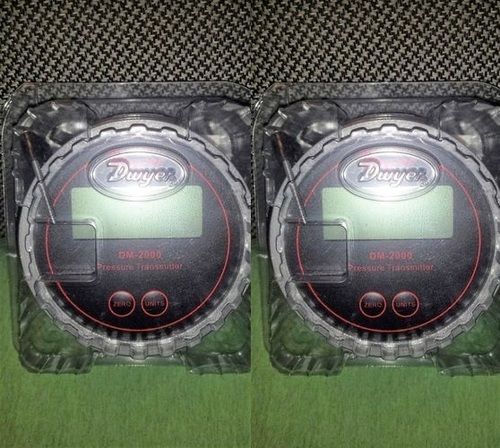
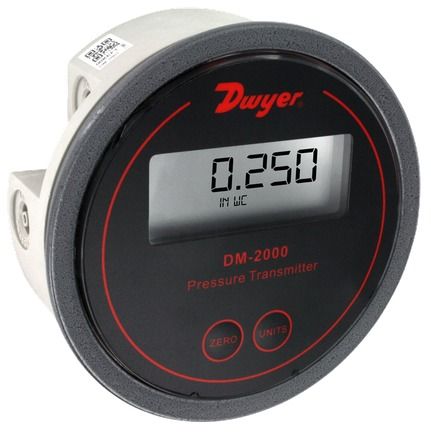
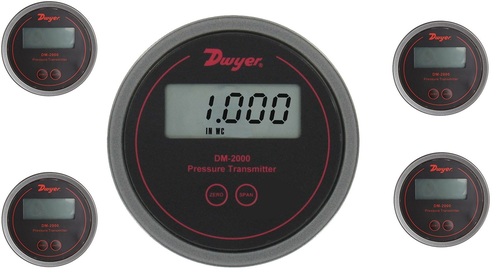
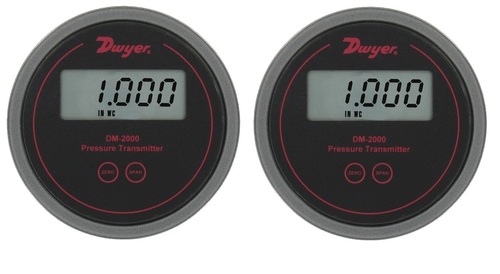
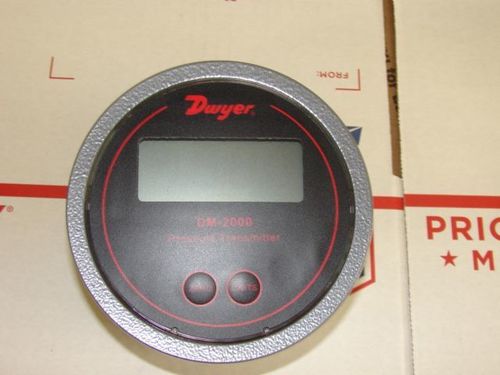
Dwyer DM-2002-LCD Differential Pressure Transmitter
- A wide range of models are available factory calibrated to specific ranges
- Pressure connections are inherent to the glass filled plastic molded housing making installation quick and easy
- Digital push-button zero and span simplify calibration over typical turn-potentiometers
- An optional 3.5 digit LCD shows process and engineering units
- A single bush button allows field selection of 4 to 6 engineering units depending on range on LCD models
Specifications
- Service: Air and non-combustible, compatible gases.
- Wetted Materials: Consult Factory.
- Accuracy: ±1% F.S. at 70°F.
- Stability: +1% F.S./yr.
- Temperature Limits: 20 to 120°F (-6.67 to 48.9°C).
- Pressure Limits: 10 psig (0.69 bar).
- Thermal Effect: ±0.055% F.S./°F (0.099% F.S./°C).
- Power Requirements: 10-35 VDC (2 wire).
- Output Signal: 4 to 20 mA.
- Zero and Span Adjustments: Digital push-button zero and span.
- Loop Resistance: DC: 0-1250 ohms maximum.
- Current Consumption: DC: 38 mA maximum.
- Electrical Connections: Screw-type terminal block.
- Display: 3.5 digit LCD, 0.7" height.
- Process Connections: 1/8" I.D. tubing.
- Mounting Orientation: Vertical.
- Weight: 4.8 oz (136 g).
ModelDescription- Differential pressure transmitter, range .250" w.c., 62.2 Pa, 6.35 mm w.c., .622 mbar.
Reliable Industrial PerformanceEngineered for demanding environments, the DM-2002-LCD transmitter boasts high accuracy and a fast response time of less than 1 second. Powder-coated and housed in polycarbonate, it meets IP54 standards for protection while handling pressures up to 2000 Pa.
Simple Installation and OperationInstallation is streamlined with wall mounting and a screw terminal block for electrical connections. The clear LCD display makes real-time readings accessible, while the 4-20 mA output supports seamless integration with standard industrial systems.
Versatile and Safe ApplicationSuitable for air and non-corrosive gases, the device is ideal for HVAC, cleanrooms, and process monitoring. Its CE certification and robust construction ensure safe operation and long-term durability in varied industrial settings.
FAQs of Dwyer DM-2002-LCD Differential Pressure Transmitter:
Q: How is the Dwyer DM-2002-LCD Differential Pressure Transmitter installed?
A: The DM-2002-LCD comes with mounting hardware and is designed for convenient wall mounting. Electrical connections are made via a user-friendly screw terminal block, simplifying setup in industrial or commercial environments.
Q: What gases can be measured with this differential pressure transmitter?
A: This device measures the differential pressure of air and non-corrosive gases only, ensuring accurate results and long-term reliability when used within its specified pressure range.
Q: When is the best time to calibrate or maintain the DM-2002-LCD?
A: For optimal accuracy, calibration should be performed according to your facilitys standard maintenance schedule or as recommended by local regulations for pressure instrumentation.
Q: Where can the DM-2002-LCD be effectively used?
A: This transmitter is suitable for use in cleanrooms, HVAC systems, industrial processes, or any application requiring precise monitoring of low-pressure or differential pressure in non-corrosive gas environments.
Q: What are the main benefits of using an LCD digital display on this transmitter?
A: The integrated LCD display provides instant, clear readings, enabling quick status checks and adjustments without the need for external measuring devices.
Q: How does the device ensure safety and durability for industrial applications?
A: With an IP54 protection class, polycarbonate housing, silicone seals, and CE marking, the transmitter is built to withstand challenging industrial environments, ensuring long-lasting and safe operation.
Q: What output signal does the DM-2002-LCD provide and why is it beneficial?
A: It provides a 4-20 mA output signal, widely recognized for its reliability and compatibility with industrial control and monitoring systems, supporting efficient data transfer and process integration.






 Send Inquiry


 Send Inquiry


