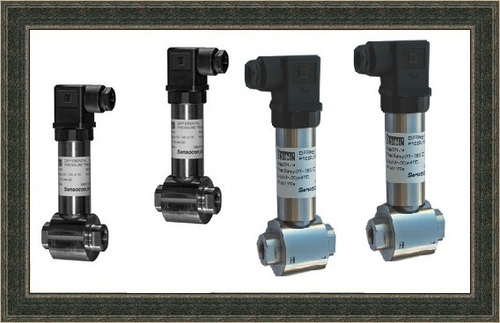
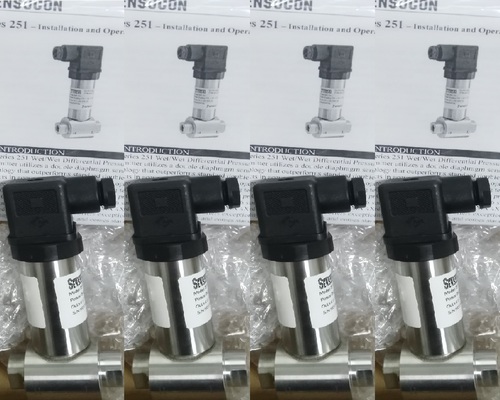
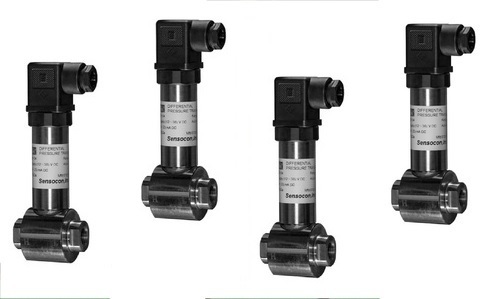
About Sensocon USA Wet/Wet Differential Pressure Transmitter Series 251-03
Sensocon USA Wet/Wet Differential Pressure Transmitter Series 251-03The Series 251 wet/wet differential pressure transmitter utilizes a double diaphragm sensor technology that outperforms standard double sensor products in accuracy, reliability and static operating pressure. This differential pressure sensing technology offers 0.25% accuracy with static operating pressures up to 1000 PSI. The Series 251 features 316 stainless steel construction designed to meet NEMA 4X (IP 65) standards. The transmitter also offers exceptional field flexibility with a 5:1 turn down and comes standard with a certificate of calibration.- Media compatibility: Gas and Liquids compatible with 316SS
- Accuracy: +/- 0.25% F.S.
- Over Pressure: positive - 2x f.S.; negative-1x F.S.
- Working Pressure: 1000 PSI (7MPa)
- Temperature Limits: Operating: -40° to 185°F (-40° to 85°C)Compensated: -4° to 158°F (-20° to 70°C)
- Thermal Effect: +/- 0.028% FS/°F (0.050%FS/°C)
- Stability: +/- 0.5% FS/year
- Power Supply: 12-30 VDC
- Output Signal: 4-20 mA, 2-wire
- Electrical Connection: mini DIN 43650
- Response Time: 100 ms
- Turn Down: 5:1
- Enclosure Rating: NEMA 4X (IP 65)
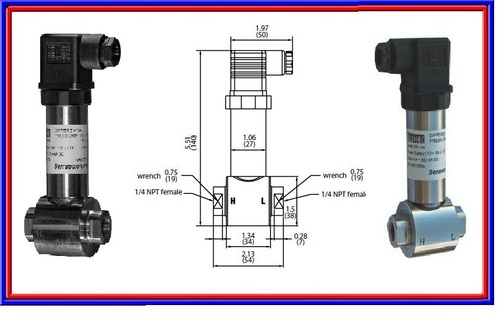
- Process Connection: 1/4" NPT female, optional 1/4" G
- Mounting Position Effect:0.1% F.S., can be corrected by zero adjust
- Model Number : 251-03
- Range : 0 - 15 PSI ( 103 kPa )
Versatile Differential Pressure MeasurementDesigned to support both liquid and gas media, the Series 251-03 ensures flexibility in various process control and monitoring systems. Its wet/wet configuration makes it ideal for applications where both ports are exposed to fluid media, maximizing compatibility and stability for industrial-grade performance.
Reliable Performance and Intelligent DesignWith a rugged anodized aluminum body and stainless steel wetted parts, this transmitter withstands harsh environments and resists corrosion. The integrated Viton seal and NEMA 4 (IP65) rating offer additional protection from moisture and dust, ensuring long-lasting operation in indoor or outdoor locations.
User-Friendly Installation and CalibrationThis transmitter is supplied with mounting hardware and utilizes a 1/4" NPT female thread for quick connection. Electrical setup is streamlined by a terminal block and cable gland. Internal potentiometers provide simple zero and span calibrations, allowing users to adapt the device for precise process requirements.
FAQs of Sensocon USA Wet/Wet Differential Pressure Transmitter Series 251-03:
Q: How is the Sensocon Series 251-03 differential pressure transmitter installed and connected?
A: The transmitter is wall-mounted using the included hardware and connects via a 1/4" NPT female thread. Electrical wiring is straightforward with a terminal block and cable gland, requiring a 1230 VDC power supply.
Q: What types of media are compatible with the Series 251-03 transmitter?
A: This device is suitable for most liquids and gases that are not corrosive to its stainless steel wetted parts and Viton seal, making it highly versatile across various industrial applications.
Q: When should I consider adjusting the zero and span settings?
A: You should adjust zero and span via the internal potentiometers when setting up the transmitter for your specific process conditions or if you notice drift in measured values, ensuring ongoing measurement accuracy.
Q: Where can the Series 251-03 transmitter be effectively used?
A: Thanks to its IP65/NEMA 4 protection rating, this transmitter can be reliably operated in both indoor and harsh outdoor environments, including process plants, HVAC systems, and fluid handling installations.
Q: What benefits does the digital electronic processing type provide?
A: The digital electronic processing ensures rapid response times (<100 ms), higher measurement stability, and improved accuracy, enhancing real-time control and monitoring in critical industrial processes.
Q: How do I calibrate the Series 251-03 transmitter for my application?
A: Calibration involves accessing the internal potentiometers to fine-tune zero and span. This enables precise adjustments to match the actual operating conditions and the requirements of your monitoring system.







 Send Inquiry


 Send Inquiry


