

Call us now
08045477767
Call us now
08045477767
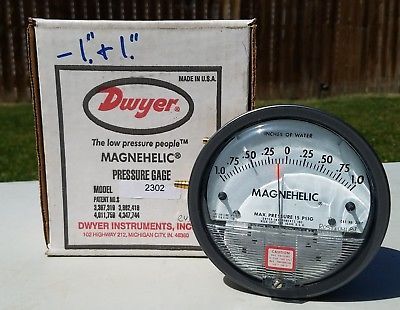
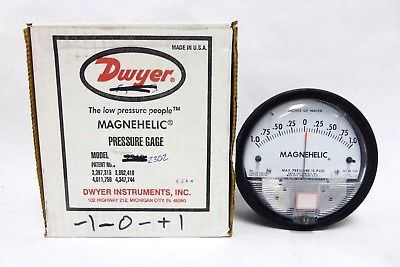
Dwyer 2302 Differential Pressure Gage,Range 1-0-1 Inch WC(inches of water),minor divisions.05, calibrated for vertical scale position
Using Dwyer's simple, frictionless Magnehelic gage movement, it quickly indicates low air or non-corrosive gas pressures--either positive, negative (vacuum) or differential. The design resists shock, vibration and over-pressures. No manometer fluid to evaporate, freeze or cause toxic or leveling problems. It's inexpensive, too.
The Magnehelic gage is the industry standard to measure fan and blower pressures, filter resistance, air velocity, furnace draft, pressure drop across orifice plates, liquid levels with bubbler systems and pressures in fluid amplifier or fluidic systems. It also checks gas-air ratio controls and automatic valves, and monitors blood and respiratory pressures in medical care equipment.
Note: May be used with Hydrogen. Order a Buna-N diaphragm. Pressures must be less than 35 psi.
What's included with the Dwyer 2302
Ask a Question About Dwyer 2302 Magnehelic Differential Pressure Gauge (1-0-1'' w.c.), Vertical Scal

Price:
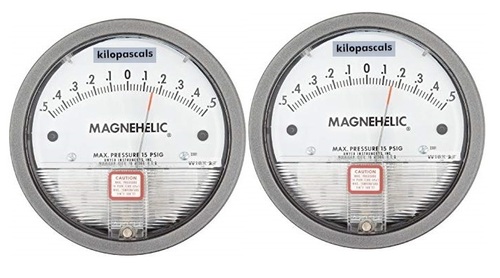
Minimum Order Quantity : 12 Pieces
Finishing : Other, Clear plastic front, black ABS enclosure
Processing Type : Other, Factory Calibrated
Pointer Material : Other, Blackoxide coated aluminum
Mount Type : Other, Surface or flush mount
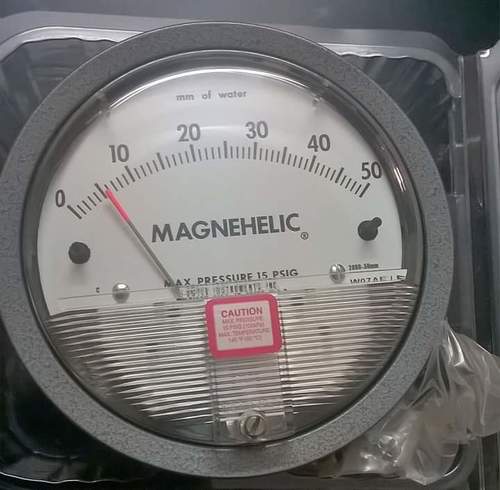
Minimum Order Quantity : 12 Pieces
Finishing : Other, Matte Silver Anodized
Processing Type : Other, Mechanical
Pointer Material : Other, Black Tapered Aluminum
Mount Type : Other, Surface or Flush Mounting
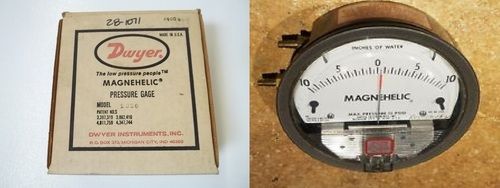
Minimum Order Quantity : 12 Pieces
Finishing : Other, Black anodized aluminum housing
Processing Type : Other, Machined housing with cast aluminum back
Pointer Material : Other, Red adjustable pointer (aluminum)
Mount Type : Other, Surface or flush mount
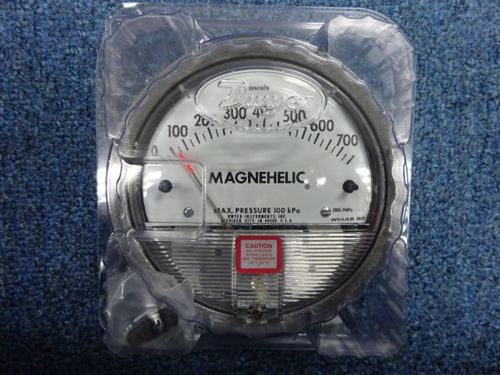
Price 4800 INR
Minimum Order Quantity : 12 Pieces
Finishing : Other, Textured black finish housing
Processing Type : Other, Mechanically Gasketed
Pointer Material : Aluminum
Mount Type : Other, Surface or Flush Mount


|


 Send Inquiry


 Send Inquiry


