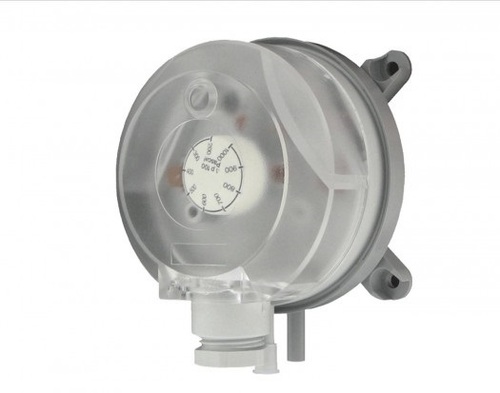
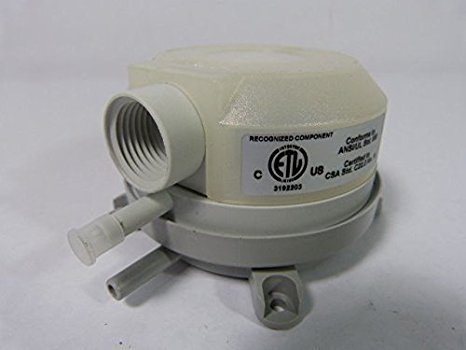
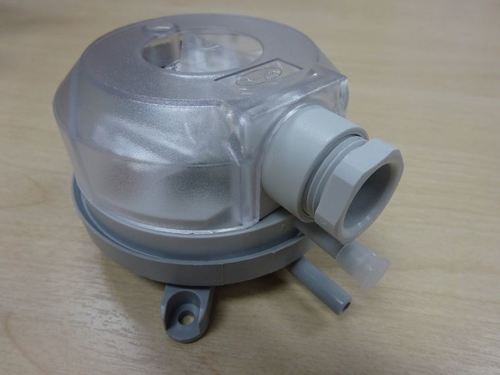
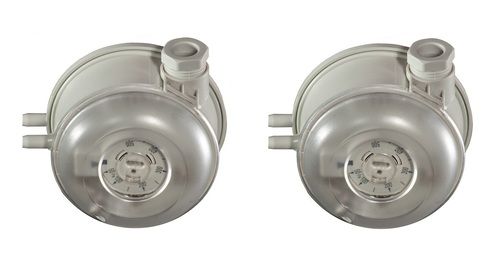
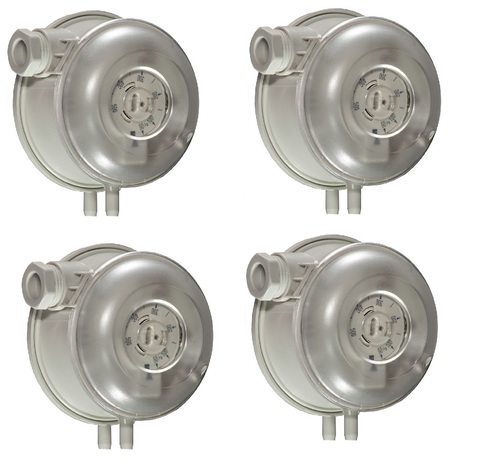
About Dwyer ADPS-05-2-N Adjustable Differential Pressure Switch
Dwyer ADPS-05-2-N Adjustable Differential Pressure Switch
Adjustable differential pressure switch, set point rang e 0.80 to 4.00" w.c., M20 connection.
Features
- Available with settings from 0.08" w.c. (20 Pa) up to 16" w.c. (4000 Pa)
- The silicone diaphragm and PA 6.6 body make the series ADPS ideal for use with air and other noncombustible gases
- The compact size, adjustment knob and low cost make the ADPS the perfect choice for HVAC applications
Specifications
- Service: Air and non-combustible, compatible gases
- Temperature Limits: Process and ambient temperature from -4 to 185°F (-20 to 85°C)
- Pressure Limits: Max. Operating Pressure: 40" w.c. (10 kPa) for all pressure ranges
- Switch Type: Single-pole double-throw (SPDT)
- Electrical Rating: Max., 1.5A/250 VAC, max. switching rate: 6 cycles/min.; Gold Contact Option: 0.4 A/ 250 VAC
- Electrical Connections: Push-on screw terminals. M20x1.5 with cable strain relief or optional 1/2" NPT connection
- Process Connections: 5/16" (7.94 mm) outside diameter tubing, 1/4" (6.0 mm) inside diameter tubing
- Enclosure Rating: NEMA 13, IP54
- Mounting Orientation: Vertically, with pressure connections pointing downwards
- Mechanical Working Life: Over 106 switching operations
- Weight: 5.6 oz (160 g)
Applications
- Monitoring air filters and ventilators
- Monitoring industrial cooling-air circuits
- Overheating protection for fan heaters
- Monitoring flows in ventilation ducts
- Controlling air and fire-protection dampers
- Frost protection for heat exchanges
Precision Differential Pressure MonitoringEngineered for industrial-grade applications, the Dwyer ADPS-05-2-N employs a reliable SPDT switch mechanism. It enables precise control by monitoring air and compatible gases within a set pressure range. This model ensures your systems operate within safe limits, reducing maintenance needs and potential downtime. Its easy-to-use adjustment knob lets technicians fine-tune set points quickly on-site.
Rugged Design and Flexible InstallationEncased in a sturdy, IP54-rated ABS housing, the ADPS-05-2-N stands up to harsh conditions. It's surface-mount design and screw terminal connections provide quick, straightforward installation. With included mounting screws and a comprehensive instruction manual, setup is simplified for distributors, installers, or maintenance teams.
FAQ's of Dwyer ADPS-05-2-N Adjustable Differential Pressure Switch:
Q: How do I adjust the set point on the Dwyer ADPS-05-2-N pressure switch?
A: You can adjust the set point using the calibrated knob and scale located on the housing. Simply turn the knob to select a pressure value between 0.08 and 0.5 in. w.c. (20 to 125 Pa), allowing precise control for your application.
Q: What applications can benefit from using the ADPS-05-2-N differential pressure switch?
A: This switch is ideal for monitoring air filters, ventilators, fans, duct pressures, and protecting HVAC equipment. It helps maintain safety and operational efficiency in industrial, commercial, and OEM environments.
Q: Where can the ADPS-05-2-N be installed and how is it mounted?
A: It is surface-mounted using the included mounting screws, making it suitable for control panels, HVAC units, or industrial equipment. The IP54 enclosure ensures safe operation in indoor industrial settings.
Q: What is the electrical connection type of this pressure switch?
A: The device uses screw terminals for electrical connections, allowing secure and reliable wiring for a variety of installation requirements.
Q: When should I consider replacing or recalibrating the ADPS-05-2-N?
A: It is recommended to check calibration periodically, especially if you notice deviations in pressure readings. Replacement or recalibration should be considered if accuracy (within 15% of set point) is compromised by wear, damage, or age.
Q: What gases are safe to use with the ADPS-05-2-N?
A: The switch is designed for use with air and other non-combustible, compatible gases. Using it with aggressive or combustible gases could damage the sensor or compromise safety.