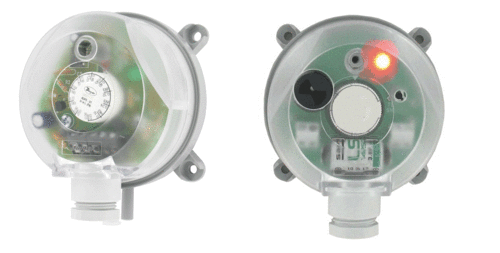
About Sensocon USA Differential Pressure Switch Series 104 - 3 Pressure Range 200-1000 Pa
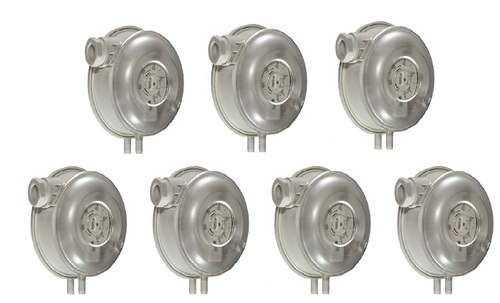
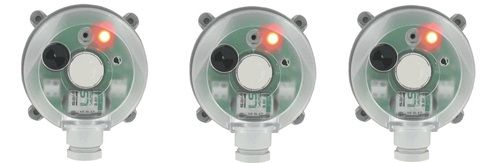
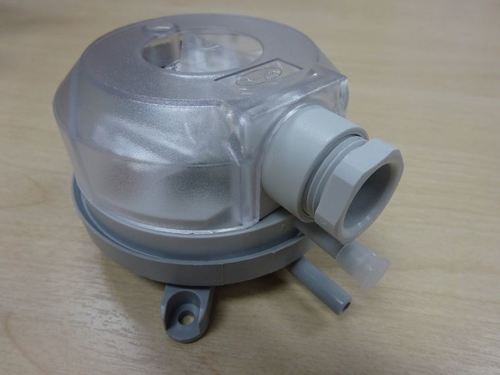
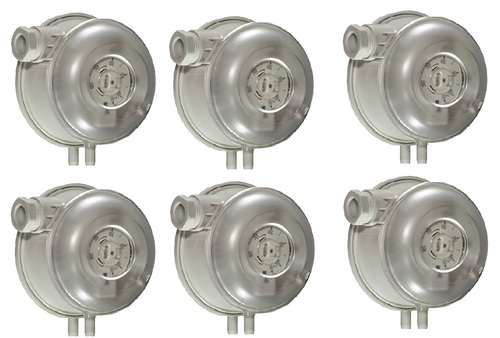
Sensocon USA Differential Pressure Switch Series 104 - 3 Pressure Range 200-1000 Pa
| Model Number | Pressure range in w.c. (Pa) |
| 104-3 | 0.80 to 4.00 (200-1000 Pa |
The Series 104 Differential Pressure Switch is a low-cost easy to use differential pressure switch for very low pressure applications. The differential pressure switch can monitor positive, negative, or differential pressure and with an easy to adjust set point knob makes field set up and adjustment hassle free. The differential pressure switch includes a SPDT relay rated for2A @ 250V and can be set as low as 0.08 w.c. (20 Pa).
Specification
Media:Air and compatible gases Max Pressure:20" w.c. (5000 Pa)Temperature Limits:5 to 140F (-15 to 60C)Electrical Rating:2A @ 250 V Electrical Connection:Screw terminals Process Connection:3/16" I.D. flexible tubing Enclosure Rating:NEMA 13 (IP 54)Weight:3.5 oz (100 g)Accessories:6 ft (1.8m) flexible tubing, (2) Static pressure fittings, C type mounting bracket, and mounting screws Repeatability:2%Dead band:approximately 10% of max set point
Accurate Pressure Sensing for Demanding HVAC ApplicationsEngineered for precision, the Sensocon Series 104-3 differential pressure switch ensures stable and reliable monitoring across its 2001000 Pa range. Suitable for various HVAC uses, it supports essential functions such as filter monitoring, duct pressure control, and fan efficiency optimization. Its electronic switching mechanism guarantees quick response times without the need for a display or Bourdon tube.
Rugged Design for Industrial EnvironmentsBuilt from molded ABS plastic and protected by robust seals, the Series 104-3 withstands harsh industrial settings. It is rated IP54 against dust and splashes, and operates reliably between -20C and +85C. This makes it an excellent choice for suppliers and traders handling large-scale or mission-critical HVAC installations in India.
Effortless Installation and Flexible Mounting OptionsThe pressure switch comes equipped with all necessary mounting hardware and push-on connectors for easy installation. It can be panel-mounted or surface-mounted to suit various application needs. The screw adjustment allows fine tuning of switch set points without hassle. Its lightweight (about 175 grams) and standard size ensure compatibility in constrained spaces.
FAQs of Sensocon USA Differential Pressure Switch Series 104 - 3 Pressure Range 200-1000 Pa:
Q: How do you adjust the set point on the Sensocon Series 104-3 pressure switch?
A: The set point can be adjusted easily using the screw adjustment provided on the device. Simply turn the adjustment screw until the desired switch point between 200 and 1000 Pa is set according to your applications requirements.
Q: What type of applications is the Series 104-3 suitable for?
A: This model is ideal for HVAC duct pressure monitoring, air filter status detection, and fan control, making it suitable for use in both commercial and industrial HVAC systems handling air and non-combustible gases.
Q: When should I consider using this pressure switch in my HVAC system?
A: Use the Series 104-3 whenever you need precise differential pressure control or monitoring, such as after filter changes, during routine maintenance, or to ensure optimal fan and airflow performance within your system.
Q: Where can the Sensocon Series 104-3 be installed?
A: Thanks to its compact design and mounting flexibility, the switch can be installed directly onto panels or surfaces within air ducts or control units. It is suited for use in a variety of HVAC settings and industrial applications.
Q: What is the process for installing the Series 104-3 pressure switch?
A: Installation involves securing the device using the supplied hardware, connecting it to your duct or system via the push-on connectors, and wiring the SPDT electrical contacts. After installation, fine-tuning is done using the set-point screw.
Q: What are the main benefits of using this differential pressure switch?
A: The primary benefits include precise and reliable pressure monitoring, high durability in industrial environments, ease of installation, wide operating temperature range, and minimal maintenance needs. It helps reduce energy costs and enhances system longevity.






 Send Inquiry


 Send Inquiry


