About Dwyer ADPS-03-2-N Adjustable Differential Pressure Switch
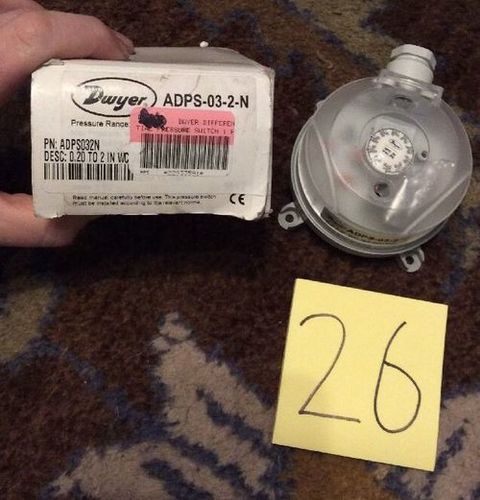
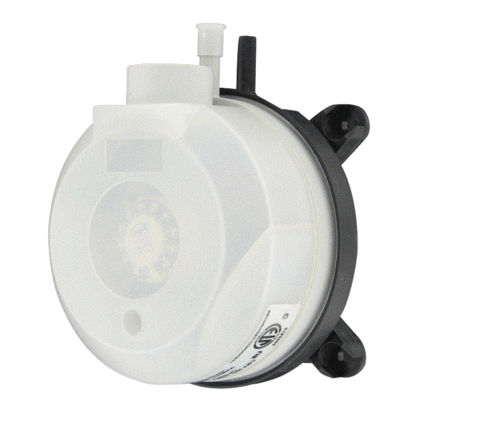
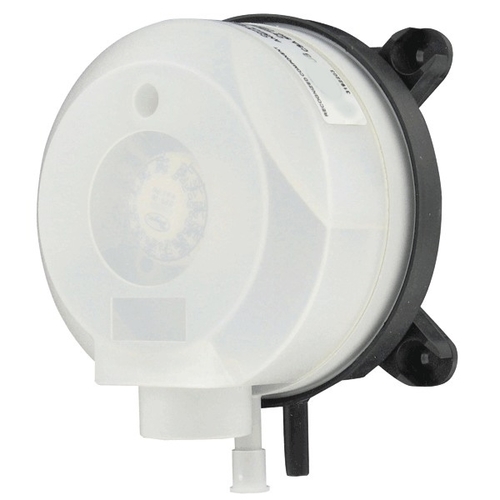
Dwyer ADPS-03-2-N Adjustable Differential Pressure Switch
Designed for pressure, vacuum, and differential pressures. The dual scaled adjustment knob in inches water column and Pascals allows changes to the switching pressure to be made without a pressure gage.
Adjustable differential pressure switch, set point range 0.20 to 2.00" w.c., M20 connection.DPS Series Offers
Features
- Available with settings from 0.08" w.c. (20 Pa) up to 16" w.c. (4000 Pa)
- The silicone diaphragm and PA 6.6 body make the series ADPS ideal for use with air and other noncombustible gases
- The compact size, adjustment knob and low cost make the ADPS the perfect choice for HVAC applications
Specifications
- Service: Air and non-combustible, compatible gases
- Temperature Limits: Process and ambient temperature from -4 to 185°F (-20 to 85°C)
- Pressure Limits: Max. Operating Pressure: 40" w.c. (10 kPa) for all pressure ranges
- Switch Type: Single-pole double-throw (SPDT)
- Electrical Rating: Max., 1.5A/250 VAC, max. switching rate: 6 cycles/min.; Gold Contact Option: 0.4 A/ 250 VAC
- Electrical Connections: Push-on screw terminals. M20x1.5 with cable strain relief or optional 1/2" NPT connection
- Process Connections: 5/16" (7.94 mm) outside diameter tubing, 1/4" (6.0 mm) inside diameter tubing
- Enclosure Rating: NEMA 13, IP54
- Mounting Orientation: Vertically, with pressure connections pointing downwards
- Mechanical Working Life: Over 106 switching operations
- Weight: 5.6 oz (160 g)
Applications
- Monitoring air filters and ventilators
- Monitoring industrial cooling-air circuits
- Overheating protection for fan heaters
- Monitoring flows in ventilation ducts
- Controlling air and fire-protection dampers
- Frost protection for heat exchanges
Precise Differential Pressure MonitoringWith a scalable range from 0.1 to 1 in w.c. and 15% set point accuracy, the ADPS-03-2-N offers precise control for monitoring differential air pressure. Its external adjustment knob provides easy calibration for specific application requirements, making it suitable for dynamic environments.
Rugged Industrial DesignBuilt with a tough polycarbonate enclosure rated IP54, this pressure switch stands up to harsh conditions. The injection-molded housing and silicone diaphragm ensure durability, while silver alloy contacts offer long-lasting electrical reliability in industrial settings.
FAQs of Dwyer ADPS-03-2-N Adjustable Differential Pressure Switch:
Q: How do I adjust the set point on the Dwyer ADPS-03-2-N pressure switch?
A: You can adjust the set point externally using the built-in knob. This allows you to set the desired differential air pressure from 0.1 to 1 in w.c. (25 to 250 Pa) without opening the enclosure.
Q: What type of applications is this differential pressure switch suitable for?
A: The ADPS-03-2-N is designed for industrial and HVAC systems, ideal for monitoring and controlling air pressure in ducts, filters, and clean rooms where differential pressure measurement is critical.
Q: When should I use this switch over electronic alternatives?
A: Choose the ADPS-03-2-N when your application requires robust, direct switching at high currents (up to 15A), simple setup, and reliability in environments with fluctuating temperatures and humidity.
Q: Where can the ADPS-03-2-N be installed?
A: This switch is best installed vertically and surface-mounted, using the included screws on a stable panel. It is suitable for indoor environments where IP54-rated enclosures are required.
Q: What is the process for connecting this switch to a pressure source?
A: Use 1/4 inch ID tubing attached to the barbed connectors to link the switch to the desired pressure source. Ensure the tubing is secure for accurate differential air pressure measurement.
Q: How does the design benefit ongoing maintenance and use?
A: Its external adjustment knob allows quick and simple set point changes without dismantling, while the sealed polycarbonate enclosure protects internal components, reducing maintenance needs and increasing operational life.
Q: What advantages does the silver alloy contact provide?
A: Silver alloy contacts offer excellent conductivity and resist wear, ensuring stable electrical performance even at high switching currents or frequent actuations.






 Send Inquiry


 Send Inquiry


