

Call us now
08045477767
Call us now
08045477767
Dwyer 4004 Capsuhelic Differential Pressure Gauge
Dwyer Instruments 4004
Capsuhelic Differential Press. Gauge, 0-4 in H2O, brass case
Differential Pressure Gage, Range 0-4.0" w.c., For Vertical Scale Position Only.
The Capsuhelic gauge is designed to give fast, accurate indication of differential pressures. The gauge may be used as a readout device when measuring flowing fluids, pressure drop across filters, liquid levels in storage tanks and many other applications involving pressure, vacuum or differential pressure. Using the basic design of Dwyer's time-proven Magnehelic gauge, the Capsuhelic gauge contains a simple, frictionless movement that permits full scale readings as low as 0.5 in H2O. The pressure being measured is held within a capsule which is an integral part of the gauge. This containment of the pressure permits the use of the gauge on system pressures of up to 500 psig, even when differentials to be read are less than 0.1 in H2O. The diaphragm-actuated Capsuhelic gauge requires no filling liquid which might limit its outdoor applications. Zero and range adjustments are made from outside the gauge, and there is no need to disassemble the gauge in normal service. Note: May be used with Hydrogen. Order a Buna-N diaphragm. Pressures must be less than 35 psi.
Product Highlights
Brass case
0-4 in H2O


Price:
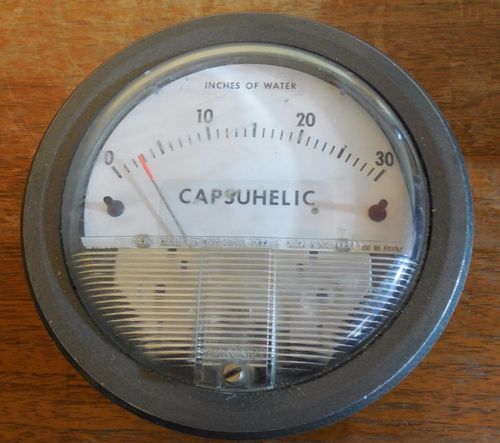
Price 9871034100 INR
Minimum Order Quantity : 12 Pieces
Accessories : Mounting bracket, instruction manual
Grade : Industrial Grade
Scale Range : 030 inches of water gauge (inH2O)
Pointer Material : Other, Black aluminum
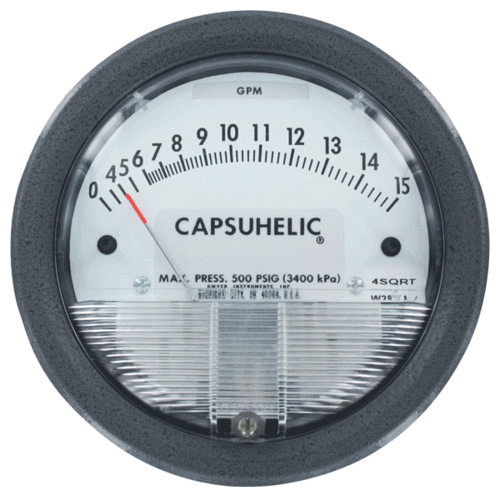
Price 9871034100 INR
Minimum Order Quantity : 12 Pieces
Accessories : Mounting Bracket, Standard Hardware
Grade : Industrial Grade
Scale Range : 015 psi (01.03 bar)
Pointer Material : Other, BlackAnodized Aluminum
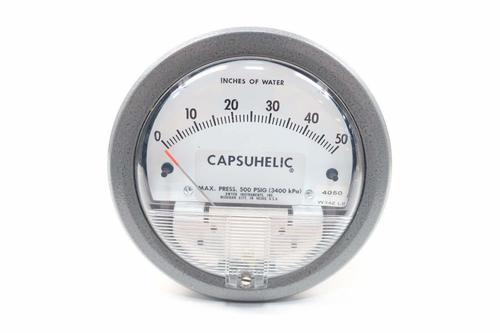
Price 9871034100 INR
Minimum Order Quantity : 12 Pieces
Accessories : Mounting hardware included
Grade : Industrial
Scale Range : 015 psi (or as specified)
Pointer Material : Other, Black anodized aluminum
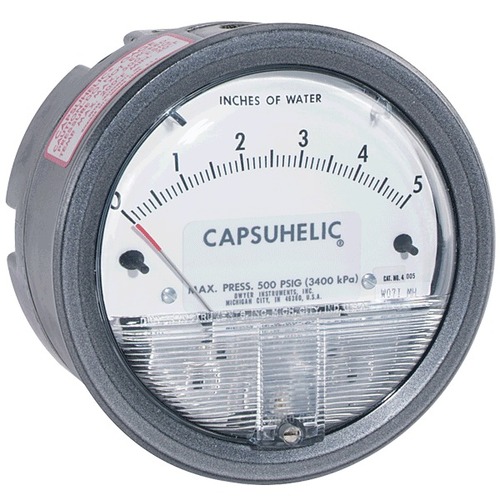
Minimum Order Quantity : 12 Pieces
Accessories : Mounting ring, dust plug, screws
Grade : Industrial
Scale Range : 05 Inches Water Column (WC)
Pointer Material : Other, Anodized aluminum


|


 Send Inquiry


 Send Inquiry


