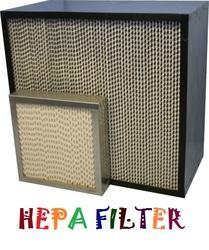
Industrial HEPA Filters

Industrial HEPA Filters

Industrial HEPA Filters Specification

  • Installation Type
  • Modular Installation
  • Application
  • Air Filtration in Industrial Environments
  • Hole Size
  • 0.3 microns
  • Output
  • Clean Air
  • Color
  • White
  • Material
  • Metal Frame Fiberglass Media
  • Filters
  • HEPA
  • Features
  • High Efficiency Durable Frame
  • Noise Level
  • Silent Operation
  • Maintenance Type
  • Periodic Cleaning/Replacement
  • Dust
  • High Dust Retention
  • Filtration Property
  • Removes particles 0.3 microns
  • Efficiency (%)
  • 99.97% for 0.3 Microns


About Industrial HEPA Filters

Industrial HEPA Filters

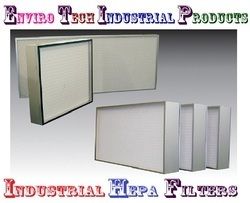
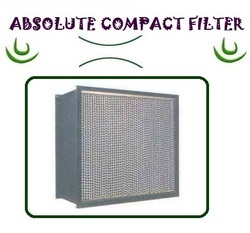
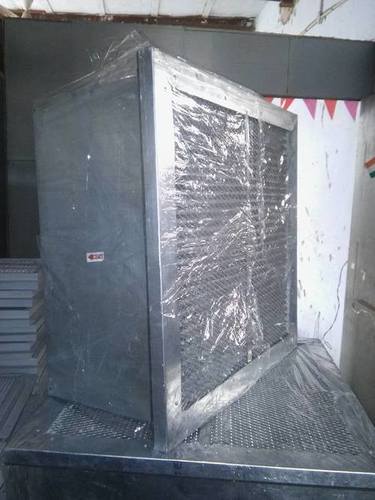
We manufacture and supply a wide range of Industrial HEPA Filters which has high filtration efficiency. These are manufactured by hemmed edges of aluminum separators in order to provide rigidity & uniform air flow. We do quality analysis and testing of these Industrial HEPA Filters before we handover this to our valuable clients. We have specialized team of experts who do quality checking under certain parameters that meets international standards.

Salient features are as follows:

  • Aluminum, S.S and G.I is used to make the body of HEPA filter
  • Used in biomedical purpose, vacuum cleaners, nuclear industry, aerospace, nuclear power, pharmaceutical processing, health care, hospitals, nuclear fuels, and electronic micro circuitry (computer chips).


Other Information

  • Pay Mode Terms: T/T (Bank Transfer)


FAQs of Industrial HEPA Filters:


Q: What type of maintenance is required for Industrial HEPA Filters?

A: Periodic cleaning or replacement is recommended for Industrial HEPA Filters.

Q: What kind of particles can the HEPA filters remove?

A: The HEPA filters can remove particles equal to or greater than 0.3 microns in size.

Q: What is the Dust retention level of these filters?

A: These filters have high dust retention capability.

Q: What is the installation type for Industrial HEPA Filters?

A: The installation type for these filters is modular installation.

Q: What is the noise level during the operation of Industrial HEPA Filters?

A: The operation of Industrial HEPA Filters is known for its silent operation.

Q: What is the efficiency percentage of Industrial HEPA Filters for 0.3 microns particles?

A: These filters have an efficiency of 99.97% for 0.3 microns particles.

Q: What is the output of Industrial HEPA Filters?

A: The output of Industrial HEPA Filters is clean air.

Tell us about your requirement
product

Price:

Quantity
Select Unit

  • 50
  • 100
  • 200
  • 250
  • 500
  • 1000+
Additional detail
Mobile number

Email

More Products in Hepa Filters Manufacturers in India Category

Ulpa Filter

Ulpa Filter

Material : Aluminum Frame and Fiberglass Media

Features : Ultralow penetration

Dust : Other, Particles over 0.1 microns

Automatic Grade : Other, Manual

Installation Type : Frame Installation, Other

Application : Air Filtration

GI Sheet Frame Hepa Air Filter

GI Sheet Frame Hepa Air Filter

Material : Galvanized Iron (GI) Sheet

Features : Rigid Frame, High Durability, Leak Proof, Uniform Air Flow

Dust : Other, Particle Filtration Down to 0.3 Microns

Automatic Grade : Other, Manual

Installation Type : Other, Box/Frame Mounted

Application : Clean Room, Hospital, Pharma, Laboratory, Industrial HVAC

SS Sheet HEPA Filter

SS Sheet HEPA Filter

Material : Stainless Steel (SS Sheet)

Features : Corrosionresistant, Highstrength design, Long filter life

Dust : Other, HEPA rated, ultrafine dust capture

Automatic Grade : Other, Manual

Installation Type : Other, Flange/Panel mounted

Application : Clean Room, Laboratory, Hospital, Pharma & Industrial

High Temperature Hepa Filters

High Temperature Hepa Filters

Material : Metal frame and HEPA media

Features : Resistant to high temperatures easy to install

Dust : High dust retention, Other

Automatic Grade : Manual, Other

Installation Type : Other, Industrystandard installations

Application : Air filtration in hightemperature environments


Back to top