About Sensocon USA Miniature Low Cost Differential Pressure Gauge Series Sz-5000-100MM
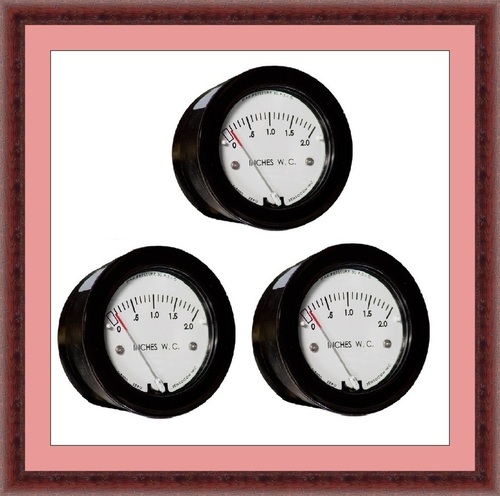
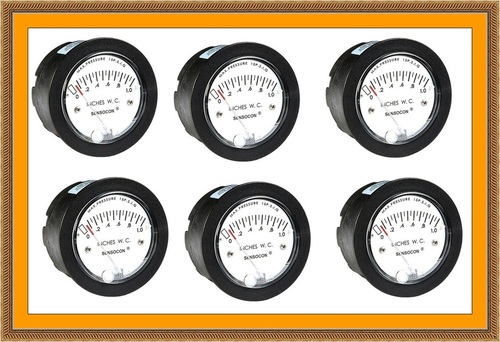
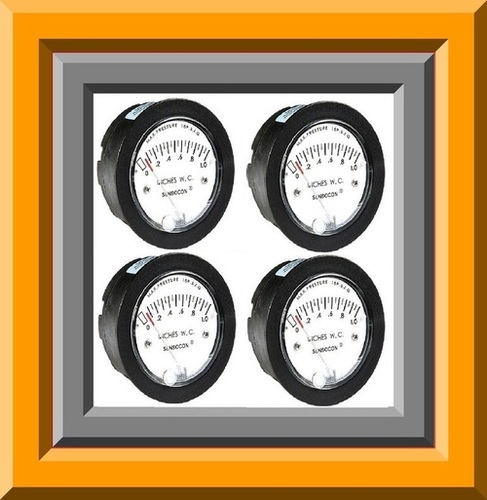
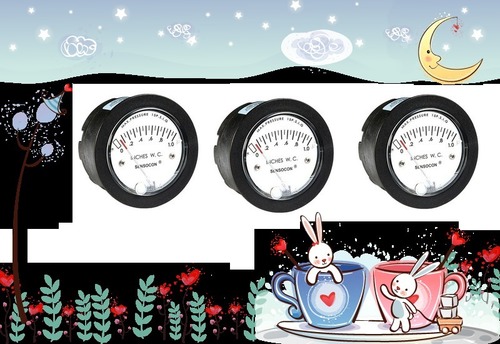
Sensocon USA Miniature Low Cost Differential Pressure Gauge Series Sz-5000-100MM
Description
Mounts in Industry Standard Holes
Accuracy 5%
Low-Cost Miniature Size
The Series Sz-5000 is a low cost, diaphragm operated, differential pressure gauge in a miniature housing. The Sz-5000 can be used in applications for measuring positive, negative, or differential pressure with an accuracy of 5%. Standard applications include monitoring filter status, duct static pressure, room pressure, fan or blower pressure, paint booths, dust collectors, and cabinet purging along with many others.
Customizing Options Available
MODEL NUMBERS
| MODEL NUMBERS | Pressure Range |
| Sz-5000-100MM | 0-100 MM |
SPECIFICATIONS
Pressure Limits: 30 PSI (2.067 bar)
Media Compatibility: Air and compatible non-corrosive gasses
Accuracy: +/- 5% full scale throughout range at 70F (21C)
Temperature Ranges: 20 to 120F (-7 to 49C)
Housing Material: Glass-filled nylon, polycarbonate cover
Process Connection: Barbed connections for 3/16" I.D. tubing
Weight: 6 oz (170 g)
Accessories: Two mounting studs and hex nuts, allen wrench, and panel mounting bracket
Agency Approvals: RoHS, CE
Precision Differential Pressure MeasurementEngineered for high accuracy, the Sz-5000-100MM offers precise readings for differential pressure applications ranging from 0-500 Pa to 0-1500 Pa. The analog display showcases easy-to-read values with 1 Pa resolution, ensuring subtle pressure changes are quickly detected for critical environments.
Robust Construction and Industrial GradeBuilt with a powder-coated ABS case and brass internal components, this pressure gauge stands up to demanding industrial use. Its shock resistance rating of up to 10G makes it suitable for environments subject to vibration or mechanical stress, ensuring longevity and consistent performance.
User-Friendly Installation and MaintenanceSupplied with mounting hardware, the back-side 1/8 NPT female connection enables straightforward installation on surfaces. The gauge is factory calibrated for immediate use, minimizing setup and reducing maintenance requirements for HVAC professionals and facility managers.
FAQs of Sensocon USA Miniature Low Cost Differential Pressure Gauge Series Sz-5000-100MM:
Q: How do I install the Sensocon Sz-5000-100MM differential pressure gauge?
A: Installation is straightforward: use the provided mounting hardware to affix the gauge to a suitable surface, and connect the back-side 1/8 NPT female thread to your pressure source. Ensure the device is installed within its specified temperature and humidity limits for optimal performance.
Q: What types of applications are ideal for this pressure gauge?
A: The Sz-5000-100MM is designed for monitoring differential pressure in HVAC systems, clean rooms, and static pressure environments. Its industrial-grade construction and high accuracy make it suitable for both commercial and laboratory use where precise air or non-corrosive gas pressure measurement is required.
Q: When is calibration necessary for this gauge?
A: The gauge comes factory calibrated, so it is ready for use upon installation. Recalibration is generally only needed if there is evidence of measurement drift, following mechanical shock beyond its 10G rating, or after prolonged use in critical applications.
Q: Where should the gauge be mounted for best results?
A: It is best mounted on a stable surface near your pressure source, with consideration for the ambient temperature (-20C to +60C) and humidity (up to 80% RH non-condensing). The back-side connection facilitates easy integration into most system designs.
Q: What benefits does the IP42 ingress protection offer?
A: IP42 certification protects the gauge against accidental dripping and solid object intrusion, making it robust for general industrial use. While not fully waterproof, it is suitable for clean room and HVAC installations where dust and moisture exposure is limited.
Q: How does the mechanical differential pressure sensing improve reliability?
A: Mechanical sensing eliminates dependence on electronic components, reducing the risk of failure due to electrical issues and ensuring reliable analog readings in environments where electromagnetic interference can be a concern.







 Send Inquiry


 Send Inquiry


