About Forced Draft Blower
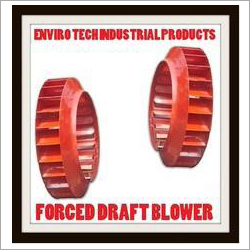
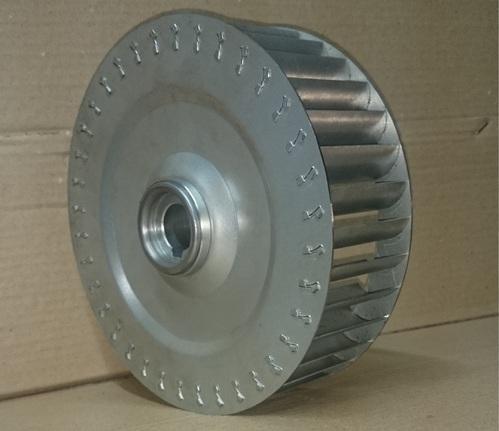
Forced Draft Blower- Fan wheel has backward curved blades and is designed for either clockwise or anti-clockwise rotation. The blades and wheel are aerodynamically formed to ensure highest efficiency.
APPLICATIONS :
- Forced Ventilation
- DC Motor Ventilation
Drying Application - Wire Drawing
- Dust Proofing / Pressurization
Fans that are used to pressurize a space or create mechanical air pressure in a system are referred to as forced draft fans. Occasionally, manufacturing spaces are required by specifications to be maintained at a specific positive pressure. This requirement is common in clean room processes for scientific work. Forced draft is also used to identify the combustion process used in large boilers. When mechanical ventilation is supplied to these boilers, the heat transfer rate increases; the boiler can be reduced in size to produce the same amount of energy as natural draft.
Other Information
- Pay Mode Terms: T/T (Bank Transfer)
Built from mild steel and protected with powder coating and epoxy paint, this Forced Draft Blower is engineered to withstand demanding industrial environments. Its backward curved impeller maximizes air movement while maintaining energy efficiency, reaching up to 82%. The belt-driven system ensures reliable performance for continuous operation.
Flexible Applications Across IndustriesSpecifically designed for use in industrial ventilation, boilers, and dust collection systems, the blower offers customizable air flow (30005000 m/hr) to fit various operational needs. Its compact base-mounted structure allows easy integration into existing setups, while the air-cooled system supports efficient operation at temperatures up to 60C.
Quiet and User-Friendly OperationOperating at noise levels below 85 dB, the blower remains suitable for workspaces requiring controlled sound levels. With a semi-automatic design and electric power source, it simplifies daily operations, making it a pragmatic choice for manufacturers, suppliers, traders, and wholesalers throughout India.
FAQs of Forced Draft Blower:
Q: How is the Forced Draft Blower installed and where is it typically mounted?
A: The Forced Draft Blower is designed for horizontal base-mounted installation. It is suited for integration into industrial systems such as boilers, ventilation ducts, and dust collection units, typically installed at ground level for stability and accessibility.
Q: What types of industrial processes can benefit from using this blower?
A: This blower is ideal for processes requiring robust air movement, such as industrial ventilation, furnace and boiler combustion systems, and dust collection operations. Its capacity and efficiency make it suitable for various sectors including manufacturing, power plants, and material processing.
Q: When should I consider using a backward curved impeller blower over other types?
A: A backward curved impeller blower is recommended when efficiency and low noise levels are essential. Its design reduces power consumption and can handle moderate static pressures, making it highly effective for continuous, large-volume air movement in industrial applications.
Q: What is the process for customizing airflow capacity in this blower?
A: To customize airflow (between 30005000 m/hr), the impeller and motor configurations can be adjusted during the manufacturing process. Discuss your specific requirements with the manufacturer or supplier to ensure the blower matches your applications demands.
Q: How does the air cooling system benefit the blowers operation?
A: The air-cooled design maintains optimal operating temperatures, preventing overheating and ensuring reliable performance even during extended use. This cooling method minimizes maintenance needs and enhances operational lifespan under variable industrial conditions.
Q: What are the benefits of the belt-driven mechanism in this blower?
A: The belt-driven system allows flexibility in speed adjustment, easier maintenance, and reduces the transmission of vibration from the motor to the impeller. This leads to quieter operation, smoother performance, and longevity for both the motor and the blower assembly.







 Send Inquiry


 Send Inquiry


